

Artificial intelligence has become a central part of modern cloud security. Automated detection, predictive alerts, and rapid response systems now handle tasks that once required entire teams.
On the surface, this looks like progress, and in many ways, it is. But AI has also surfaced a deeper issue cloud security teams can no longer avoid: accountability does not disappear when decisions are automated. It becomes more concentrated.
Automation increased speed but also pressure
Cloud environments move fast. AI makes them move faster.
Automated systems now flag unusual behavior, block access, rotate credentials, and respond to threats in seconds. This speed reduces damage, but it also shortens the window for human reflection.
When something goes wrong, there is rarely time to ask whether an automated action was appropriate. Teams must explain what happened after the fact.
This dynamic has changed expectations. Security professionals are no longer judged only on whether systems respond quickly, but on whether responses were correct, proportionate, and defensible.
Industry analysts have noted this shift.
AI does not understand context, but teams must
AI systems operate on patterns, thresholds, and predefined logic. They do not understand business nuance.
An automated block might stop a legitimate customer. A revoked permission might interrupt critical work. A missed alert might appear insignificant until combined with other signals.
When these situations arise, leadership doesn’t ask what the AI did. They ask why the organization allowed it to happen.
This is where accountability returns squarely to human teams.
Organizations deploying AI in risk-sensitive functions increasingly recognize that automation must be paired with human oversight, clear escalation paths, and defined ownership, or risk becomes harder to manage, not easier.
The accountability gap AI exposes
AI hasn’t created new accountability problems. It has exposed existing ones.
In many teams, automation was added on top of unclear processes. Alerts existed, but ownership was vague. Decisions were automated, but responsibility was shared—or worse, undefined.
This leads to familiar breakdowns:
- Alerts are generated, but no one is clearly responsible for reviewing them
- Automated actions occur without documentation or explanation
- Teams trust AI outputs without understanding underlying assumptions
- When incidents happen, accountability becomes fragmented
AI accelerates outcomes, but it also amplifies organizational weaknesses.
Why fundamentals matter more in an AI-driven environment
There is a common assumption that smarter tools reduce the need for deep understanding. In cloud security, the opposite is proving true.
AI requires teams to understand fundamentals well enough to:
- question automated decisions
- adjust thresholds intelligently
- recognize false positives and false negatives
- explain outcomes to leadership and regulators
This need for understanding is echoed in industry reporting. IBM has highlighted that organizations using AI in security functions face increased risk when teams lack foundational knowledge to interpret and manage automated outcomes effectively.
AI doesn’t eliminate the need for judgment. It demands more of it.
How accountability is being redefined
Leading organizations are responding by redefining accountability in cloud security teams.
Rather than asking, “Did the system respond?”, they ask:
- Who owns this automated process?
- How are decisions reviewed?
- When does human intervention occur?
- How are outcomes documented?
This shift is changing how teams are structured. Clear ownership, review cycles, and governance models are becoming standard—not optional.
Accountability is no longer tied to individual actions alone, but to how systems are designed, monitored, and corrected.
What this means for cloud security roles
For professionals in cloud security, AI has raised the bar.
Technical skill remains important, but accountability now includes:
- understanding system behavior
- communicating decisions clearly
- taking responsibility for automated outcomes
- balancing speed with oversight
Security roles increasingly require comfortable people explaining why something happened, not just how it was fixed.
How training must adapt
As accountability shifts, training approaches must evolve as well. Learning paths that focus only on tools or automation risk leaving professionals unprepared for real-world responsibility.
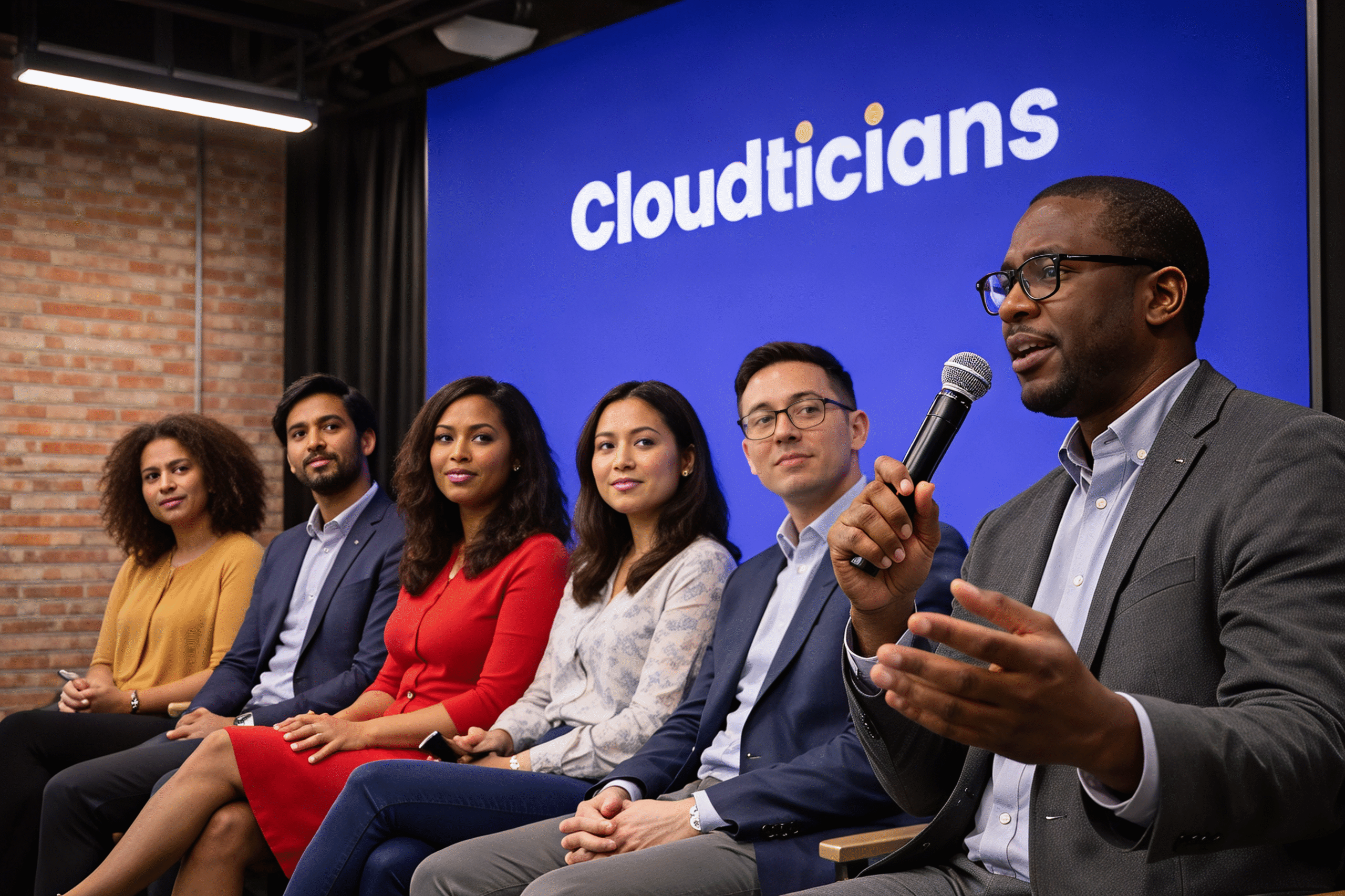
Programs like those offered by Cloudticians reflect this change by grounding learners in fundamentals, decision-making, and real-world scenarios before introducing automation. This prepares learners to work with AI as a support system.
Closing perspective
AI has changed cloud security, but not by removing humans from the equation.
It has clarified something the industry can no longer ignore: automation does not absolve responsibility. It concentrates it.
Cloud security teams that recognize this early will not only use AI more effectively, but they will be better equipped to explain, defend, and improve the decisions their systems make.